Page 1 | 2 | 3 | 4 | 5 | 6 | 7
Erin: So what were some of the challenges in translation?
Yani: We were very lucky to find a great translator in Alexander O. Smith. At that point he hadn’t translated any novels, he had done games basically. This was his first book and it’s a pride for me and Vertical to have brought him into the world of translating books. He loves the fantasy genre, has read a lot of fiction, and I think is trying to write his own too. So he already had this fantasy style. Not that degrees matter, but he did go to Harvard and he is an all-round solid writer.
One reviewer that reviewed HC Book One said, “This is the best translation from Japanese I’ve ever read.” And I do believe it’s that good, including Kawabata and all that.
It’s interesting, when you read the Japanese, it feels almost purplish. She’s writing in a baroque style on purpose and when you translate that into English, it’s not as salient. Think of Haruki Murakami, writing that feels regular for contemporary Japanese readers—when it’s translated it may feel vague or bland.
There’s this sense again that she was harking back, very consciously, to that American model that would feel foreign and pulpy for Japanese readers.
Serdar: I’ve read a number of criticism of books, Vertical books, on Amazon, where they say “the translation is so flat” and I just think, No, that’s because that’s the way it was written. They’re being faithful to the fact that it’s very spare prose and that it’s not meant to be very, like you said, very purple-y.
What I liked most about the translation: never at any point did I feel like I was reading one. I was just reading a great book.
A lot of the time I would think, “Okay, what did they mean here?” since I know a little Japanese but am by no means a translator.
Erin: So are you thinking about reading The Guin Saga in Japanese?
Serdar: I would love to. To quote someone else, I can smell a bad translation when I see one.
I was reading this and shaking my head thinking, I could force this on anyone with the name removed and they would never know that it’s a translation.
Erin: I think after the first half of the first book it really picks up, and it keeps getting better up through the fifth book.
Serdar: With a lot of Japanese creative properties, there’s nothing inherently Japanese about them except that they were created there. More recently we had this series Claymore, which I love, and of course Berserk, Vampire Hunter D. And while there are touches of things that are Asian or what have you, if the name was filed off, no one would know the difference. And I always think that if Hollywood is going to start somewhere they should start here because it’s easy to transport without losing anything. It’s already alien to its original audience so it will be foreign to us too. If there’s a short list of properties, this should be on top.
Yani: It is toward the top; you have to give credit to Hollywood because in our first 18 months of operations, so many production companies contacted us. You know those production companies formed by actors, Brad Pitt, Leonardo DiCaprio, all of them. So they are watching, they have people in studios who are curious—curious enough to find a small company like Vertical.
Erin: There are a lot of small production companies who buy ideas and stories, even if they never use it. They read newspapers, and they go buy so-and-so’s new book, and buy the rights to stories just to beat other studios to the punch.
Serdar: They’re always looking for new fresh ideas. One of the other things I was thinking about while reading was, we have this hero, who is faced with all these different external tasks, pulling armies together out of nothing, which I love, but the whole thing is about the most fundamental human question. And that’s Who am I? What am I? Am I human or not? And in the treatment I was doing I was going to make that one of my central themes. And in the end, he finally realizes, he has the permission to say, Yes, I am a man. I’ve been standing next to these two kids whose worst crime is that they were born to the wrong family. That kind of thing, I saw the series really start to develop especially in Book Four. Book Four is very introspective. There’s this whole beautiful segment in the middle that a lot of people thought was slow, but I didn’t think it was slow.
Erin: No, that was the best part!
Serdar: Where he’s really digging into himself and making these remarkable discoveries about who he is and who he ought to be. This is really not what I expected at all from this series. And again in the same book, we have Istavan’s betrayal which really hit me very deeply and I said, “Okay, now I understand how big the ambitions were for this series. She’s not just trying to give us a thrill ride, she’s trying to give us everything.”
Yani: That betrayal becomes relevant in Book 90-something.
Serdar: I could tell that it was hugely pivotal.
Erin: Yeah.
Serdar: Up until then, Istavan is kind of a roustabout. And he thinks he can get away with everything. And then he discovers there are some things you can’t get away from. And I love that.
Yani: He’s haunted by it.
By the way, Koji Suzuki’s favorite is Book Four. He read the Marches Episode upon my recommendation. He loves stories where man is alone and has to struggle against nature and try to survive. That whole chase sequence with the wolves.
Serdar: I just finished reading his Promenade of the Gods and even there there’s an element of that. It starts off in a detective story vein, and he’s trying to piece together the facts amid the chaos and the nature of his fellow man.
Yani: I think the whole Guin series, even just the first five books, serves as a kind of leadership manual because Guin is such a powerful figure.
Serdar: He forms an army out of nothing. He goes into the woods to these furry little creatures that have nothing and says, “Okay, what do you have.” And finds out they have exactly what he needs.
Erin: There’s a lot of resourcefulness.
Serdar: But he’s not a jerk about it. He knows the extent of the weight he’s carrying around. And he tries to have a sense of humor about it, he looks at it as part of the bigger picture. I love it when the two twins are whining about being split up and he just says get used to it.
Yani: I love those sentences about fate and destiny.
Serdar: The whole thing is woven around the idea that there are some people who can serve as a nexus for the way things change. They can embody these things without even trying. They’re like magnets and people flock to them without knowing why. And then when they finally realize, they can use that to make things happen.
Noah: Besides, or beyond discussions, how are you promoting the series?
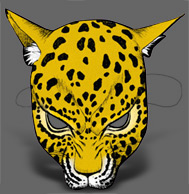
Yani: Well, we did many more ads for this than we did for many of our other titles. And leopard masks.
Noah: So when you say ads, you mean in manga magazines?
Yani: Advertisement in various monthly fan-type zines and such. The usual suspects in print.
Serdar: I know I’ve been stumping as hard as I can for it through word of mouth.
Noah: The best kind of advertisement.
Serdar: I have a friend who runs an internet radio station who focuses on anime and game music. He told me that word of mouth is the only thing he has ever found in the years that he’s been running this to get people to come back. Fliers, ads, cross-promotion does not work. The only thing that works is having people come talk to other people. And so on my own site, I looked at the first HC books, and was heartbroken at the end of that. And I did the trade paperbacks for AMN, and they were actually surprised. And they asked about the tie-in, and I told them the whole deal. And they told me wow, keep in touch with them!
Yani: Definitely from the beginning, with the hardcovers in 2003, and earlier when we contacted her, movies, visual adaptation was part of our strategy. We’ve been waiting for that and finally it will happen. The TV anime series is pretty much guaranteed and I am pretty certain that something will come from Hollywood.
Erin: I found out about the series from reading manga blogs.
Yani: Actually, our main promotional thrust is Serdar. (Laughter)
Serdar: Really?
Yani: He reviews every book before it comes out.
Serdar: I’ve really been on top of it, because these guys are the only company that I can think of right now that are doing what I’ve always wanted to see in English-language publishing. Which is go to Japan and find all the cool stuff and bring it here for us and take a gamble on it. I’ve been lapping it up because I wanted to see this for 15 years. Ever since, I started finding out about Japan in general. And since my command of Japanese is terrible, I have them as a go-between.
Page 1 | 2 | 3 | 4 | 5 | 6 | 7